Mehmet Urcu 14 Feb 2024 2-minute read
According to a report published by Rabobank in October 2023, global fertilizer prices are expected to stabilize in 2024—despite the uncertainty stemming from the Israel-Palestine conflict—following the extreme market volatility and record price levels seen in recent years.
An agricultural banking expert states in their newly released Annual Fertilizer Outlook report—titled "What's Next?"—that while the tensions between Israel and Palestine have introduced some uncertainty regarding the outlook for fertilizer markets, the current impact on the food and agriculture sectors remains manageable.
Vitor Pistoia, an agricultural inputs analyst at Rabo Research and one of the report's authors, states that farmers worldwide could face some negative impacts due to potentially rising energy and fertilizer costs, alongside a slight decline in import demand and prices for grains and oilseeds resulting from the tensions between Israel and Palestine.
However, should these tensions spread to the wider Middle East and North Africa (MENA) region, the impact on the demand for grain, meat, and dairy products—in addition to fertilizer supplies—could be significant.
The report states that Israel is a major exporter of potassium and phosphorus, accounting for 6% of global potassium exports and 8% of phosphate fertilizer exports in 2022. We will see in the coming months just how much these trade volumes will be affected.
Countries in the MENA region account for approximately 30% of global nitrogen fertilizer exports (top five exporters: Qatar, Saudi Arabia, Egypt, Oman, Algeria) and more than 25% of global compound fertilizer exports (top three: Morocco, Saudi Arabia, Israel), as well as about 10% of potash fertilizers (top three: Israel, Jordan, Egypt); furthermore, Morocco, Israel, Egypt, Lebanon, and Tunisia emerge as the top five countries responsible for nearly half of all phosphate fertilizer exports.
With just a few months left until 2024—a year I would describe as much calmer for the fertilizer market—2023 can be viewed as a transition year, despite lingering effects from the market turmoil of 2022. The global fertilizer outlook report points to a recovery, with global fertilizer usage rising by approximately 3% in 2023, compared to a 7% decline in 2022.
As for 2024, the data points to an increase of nearly 5% in global fertilizer consumption. Indeed, I can say that all these indicators align with the Rabobank fertilizer affordability index—which tracks fertilizer costs relative to the prices obtained for grains and oilseeds—showing a much higher value compared to the previous year.
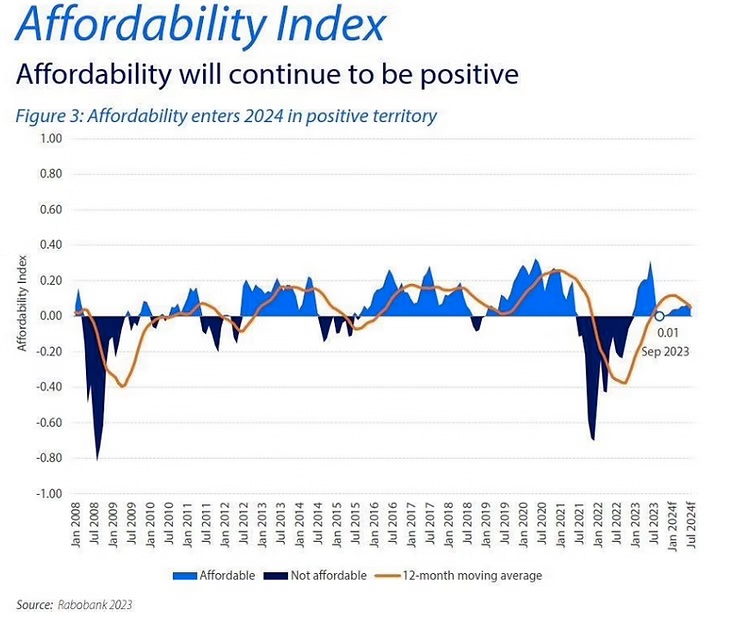
I believe this reflects the expectation of increased consumption for 2023, with nitrogen usage projected to rise by 2%, phosphate by 3.90%, and potassium by 5%.
We know that global fertilizer markets possess sufficient availability—and adequate alternative suppliers for potash and phosphate products—to withstand potential logistical disruptions in Israel. However, if these conflicts lead to delays, cause ship operators to hesitate about docking at the Mediterranean port of Ashdod, and result in higher logistics costs, exports could be disrupted, potentially followed by price increases.
The nitrogen market is facing challenges due to reduced demand from corn and wheat growers. Furthermore, with winter approaching, Europe's natural gas demand is subject to increased uncertainty, creating unpredictability regarding nitrogen fertilizer production costs. Analysts also note that they are monitoring tight ammonia supplies, which could drive up prices in the coming months. Observing a positive outlook for potash and phosphate, Rabobank highlights that potash supplies are currently abundant and the phosphate market is on the rise, driven by the resumption of MAP/DAP exports from China.
In conclusion, regarding the disruptions and uncertainties stemming from the Israel-Palestine tension, I can state that the impact on fertilizer markets is marginal at this stage.
Kind regards,

SETO is a trusted agricultural brand that offers innovative solutions in plant nutrition and aims to increase efficiency in agricultural production.