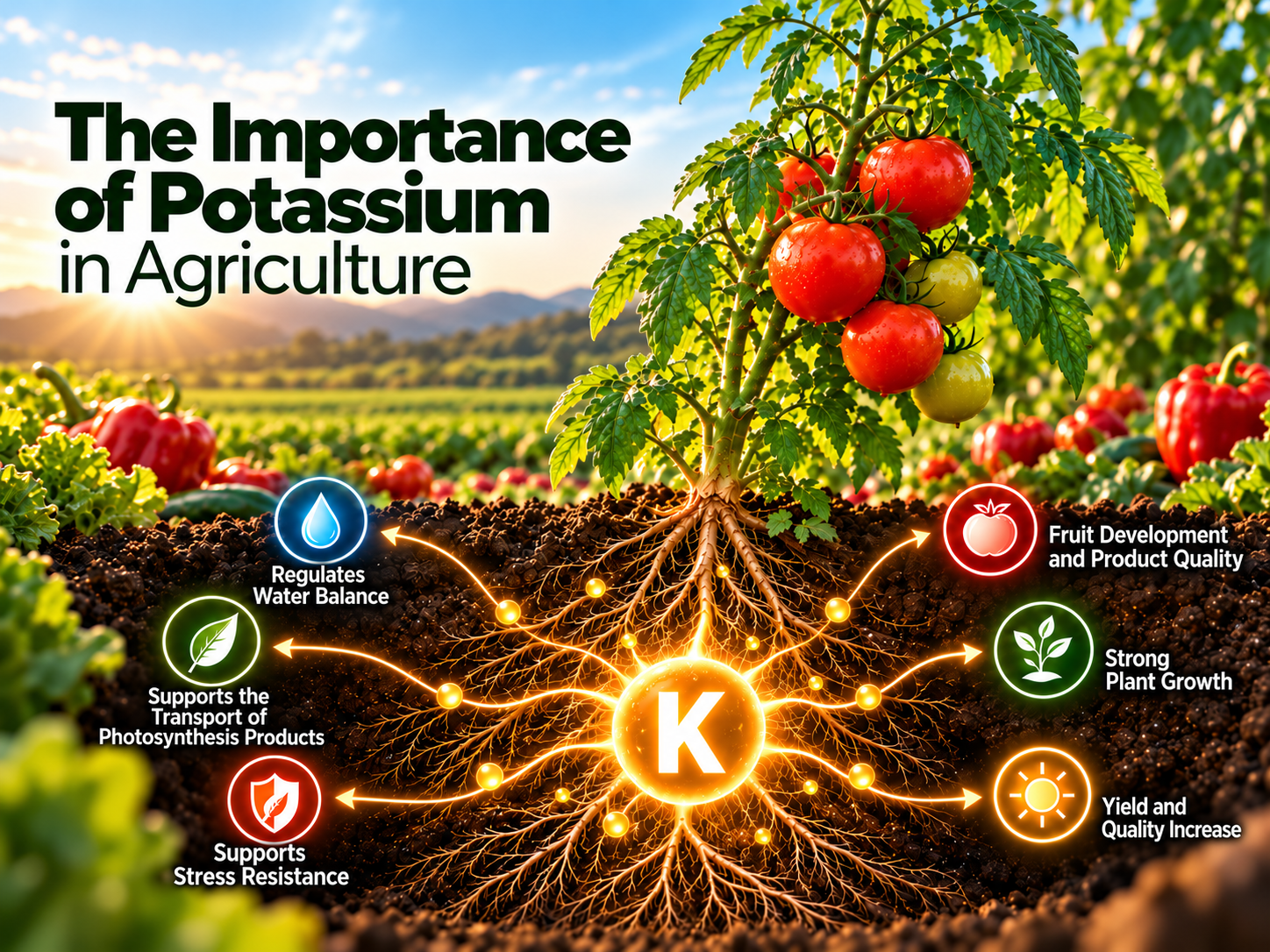
Potassium (K) is one of the essential nutrients required for the healthy development of plants and the formation of high-quality produce. Along with nitrogen and phosphorus, potassium—one of the three primary macronutrients in plant nutrition—plays a crucial role in regulating numerous physiological mechanisms during the plant's development process.
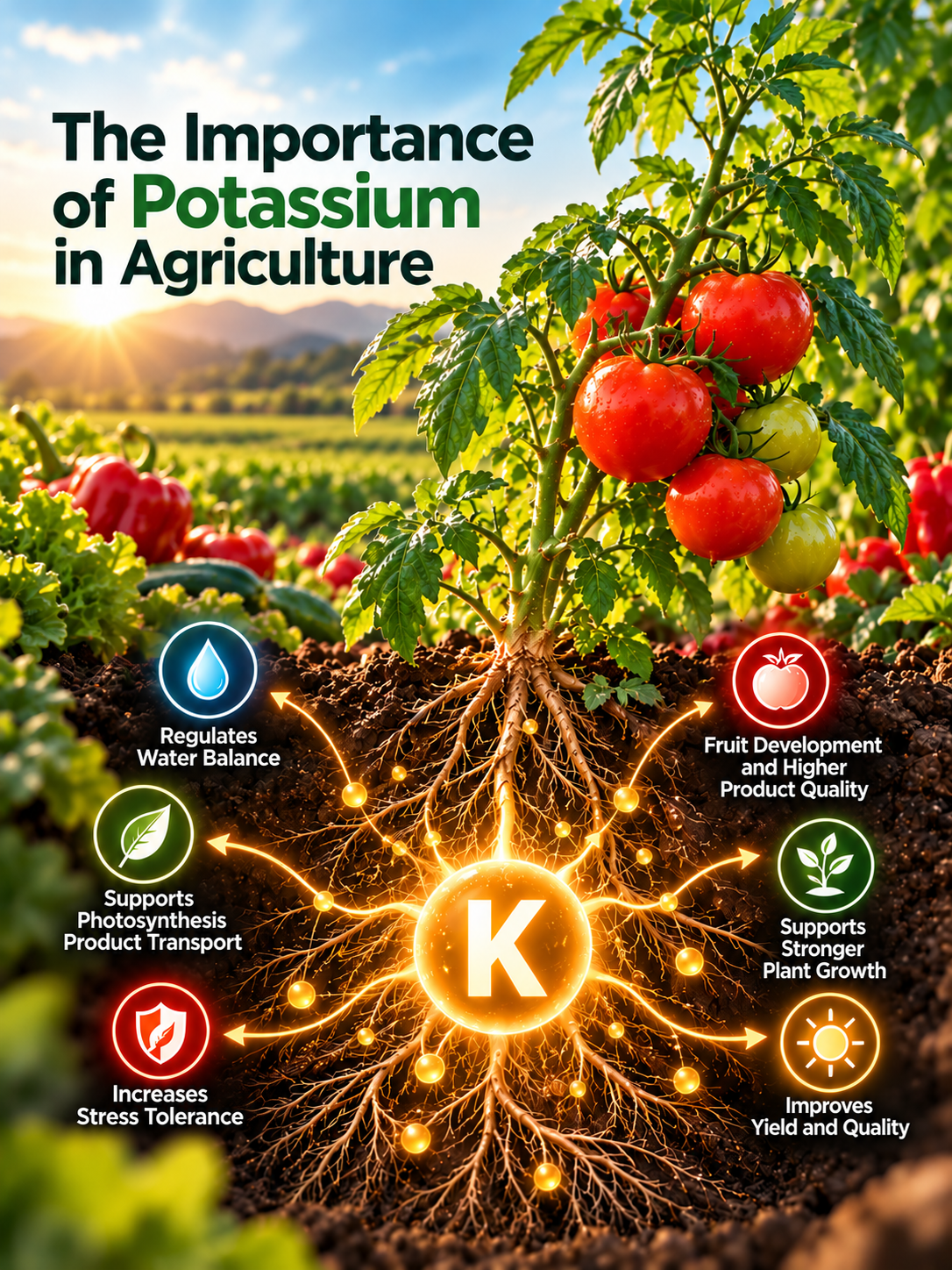
Rather than serving as a direct structural component within the plant, potassium contributes to the regulation of numerous vital processes. It is particularly important for maintaining water balance, enzyme activity, the transport of photosynthesis products, and resistance to stress conditions.
Adequate and balanced potassium nutrition;
Potassium is a crucial nutrient for crop quality, particularly in fruit and vegetable cultivation. Depending on the plant species and growing conditions, it plays a role in the development of fruit size, color formation, sugar accumulation, firmness, and overall quality characteristics.
Therefore, potassium requirements should be assessed not only in terms of plant growth but also regarding the quality attributes of the harvested produce.
Although symptoms of potassium deficiency vary depending on the plant species, they typically appear first on older leaves. Yellowing along the leaf margins may occur, followed by browning or drying in later stages.
As the deficiency progresses, plant growth may slow down, resistance to stress conditions may decrease, and crop quality may be adversely affected.
In plant nutrition, consideration must be given not only to the amount of potassium applied but also to its balance with other nutrients, soil characteristics, the plant's growth stage, and the specific requirements of the crop.
Soil analyses—and foliar analyses when necessary—help provide a more accurate assessment of the plant's nutritional status. A balanced fertilization program, developed based on analysis results and plant needs, supports both the efficient use of resources and sustainable production.
Potassium is an essential plant nutrient that plays a vital role in numerous processes, ranging from water management and stress tolerance to fruit development and crop quality.
When applied at the right time and in the right amount as part of a balanced plant nutrition program, potassium is a key component of healthy plant growth and high-quality production.

SETO is a trusted agricultural brand that offers innovative solutions in plant nutrition and aims to increase efficiency in agricultural production.