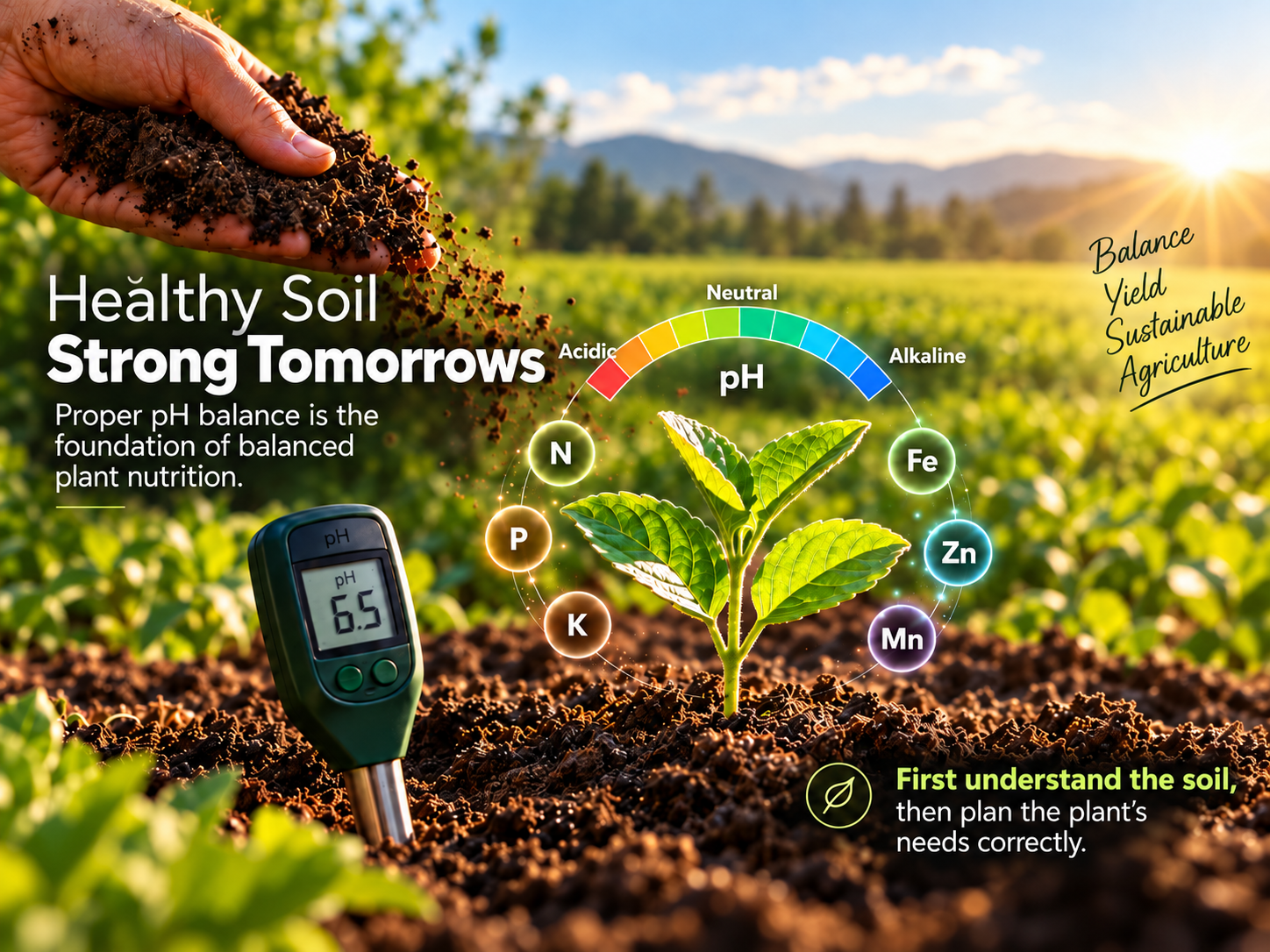
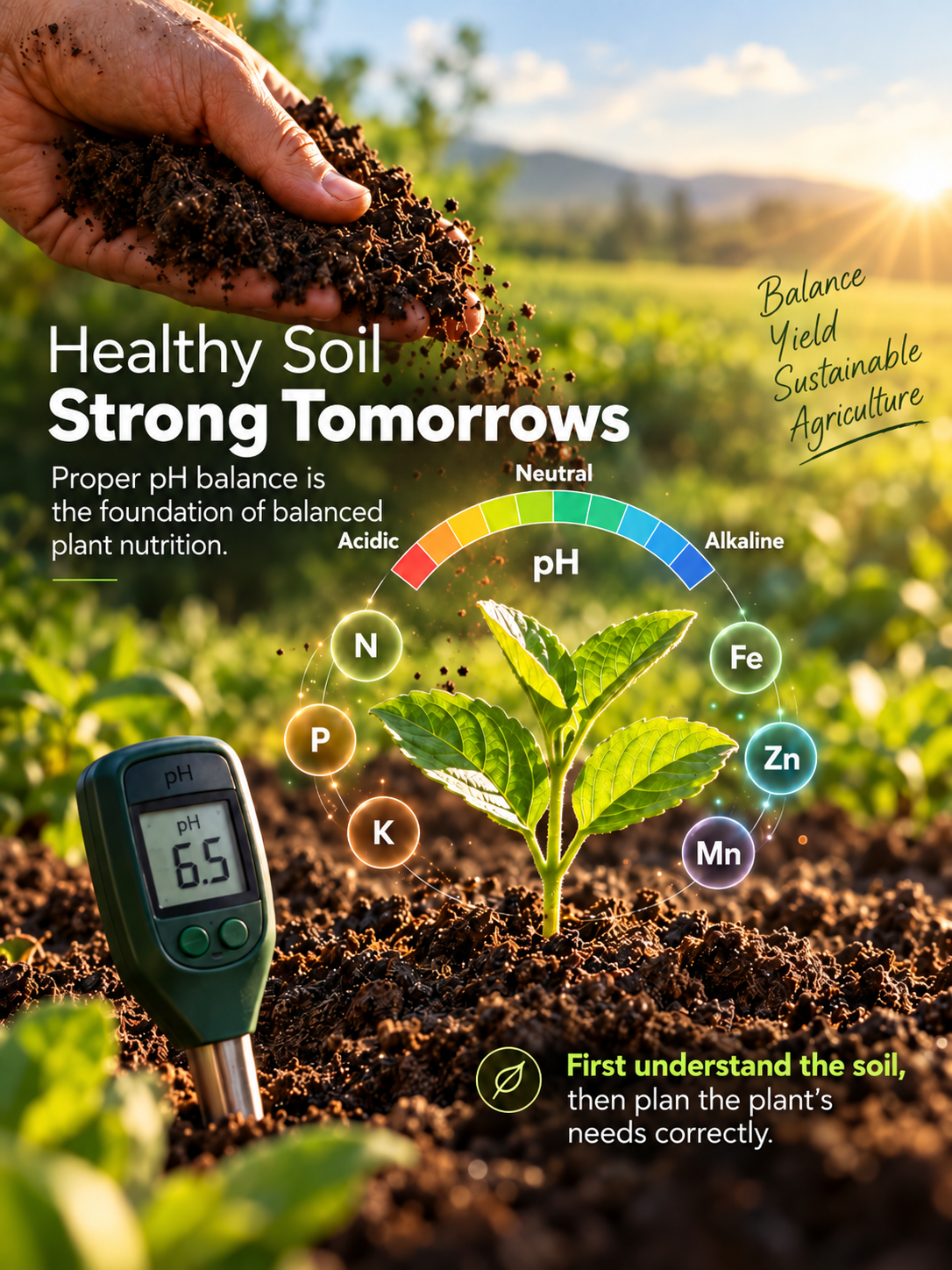
The healthy development of plants depends not only on the quantity of nutrients present in the soil but also on the extent to which these elements are available for uptake by the plant. In this regard, soil pH is a key factor in plant nutrition and fertilization programs.
pH is a value indicating the acidic or alkaline nature of the soil. On the pH scale, 7 represents neutrality; values below 7 indicate acidic conditions, while values above 7 indicate alkaline conditions.
Although each plant has a preferred pH range, conditions ranging from slightly acidic to near-neutral are generally favorable for many agricultural crops in terms of nutrient availability.
The presence of sufficient nutrients in the soil does not necessarily mean that the plant can effectively utilize them. Unsuitable pH conditions can reduce the solubility and plant availability of certain nutrients.
For instance, under high pH conditions, the availability of elements such as iron, zinc, manganese, and phosphorus may decrease. Conversely, under very low pH conditions, imbalances among various nutrients can arise, and certain elements may become soluble at levels that are undesirable for the plant.
Therefore, the correct pH conditions;
It contributes to the more efficient use of nutrients by the plant,
• Contributes to the more efficient use of nutrients by the plant,
• Increases the efficiency of the fertilization program,
• Supports root development,
• Maintains biological activity in the soil under favorable conditions,
• Contributes to the balanced development of the plant.
A proper plant nutrition program should not begin solely with the question, “Which fertilizer should be used?” It is also necessary to understand the soil's existing characteristics.
Determining the pH value through soil analysis helps in more accurately planning the fertilizers to be used, application methods, and—where necessary—the application of soil amendments.
Applications made without knowing the soil pH can result in a failure to achieve the expected effectiveness from the applied nutrients.
In agriculture, the goal should not merely be to supply nutrients to the soil, but to create conditions that allow the plant to utilize these nutrients effectively.
For this reason, pH balance is a fundamental component of proper fertilization and sustainable soil management.
First, understand the soil; then, accurately plan for the plant's needs.

SETO is a trusted agricultural brand that offers innovative solutions in plant nutrition and aims to increase efficiency in agricultural production.