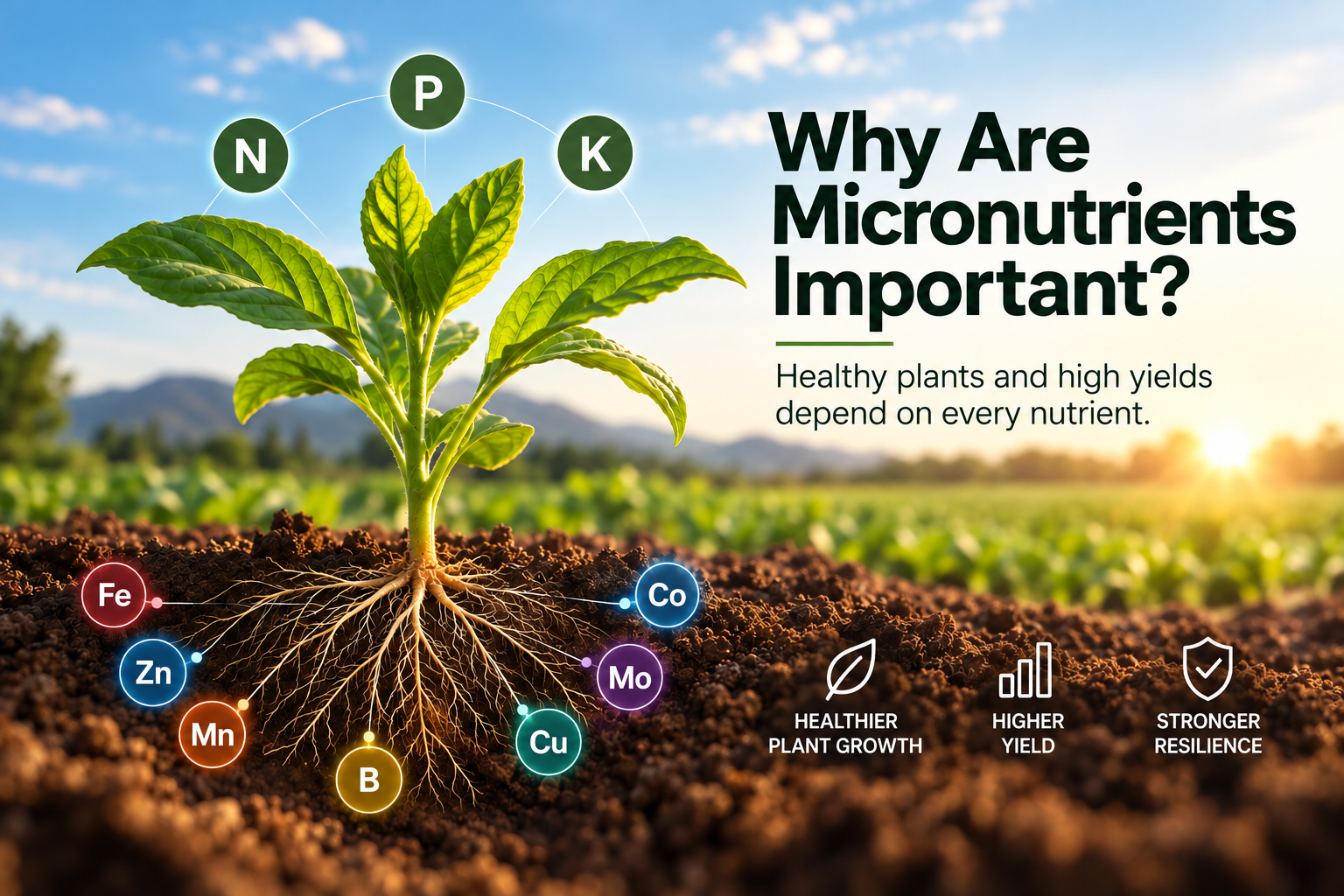
For healthy plant growth and development, plants require not only macronutrients such as nitrogen, phosphorus, and potassium but also micronutrients, which are needed in much smaller quantities. Although required in small amounts, they play a crucial role in plant growth, development, and productivity.
Iron, zinc, manganese, boron, copper, molybdenum, cobalt, and nickel are among the key micronutrients required by plants. Each performs different functions within the plant, and deficiencies can negatively affect growth, development, and crop quality.
Micronutrients:
Help ensure healthy photosynthesis and energy production.
Play a role in enzyme activity and metabolic processes.
Support root development and overall plant growth.
Contribute to essential processes such as flowering, fertilization, and fruit formation.
Help improve plant tolerance to stress conditions.
Can influence crop quality, size, and yield.
Micronutrient deficiencies may not always be immediately noticeable. Symptoms such as leaf yellowing, stunted growth, deformities, flowering problems, or reduced crop quality may occur. Moreover, these symptoms can resemble those caused by other nutrient deficiencies or environmental stresses.
Therefore, fertilization programs should focus not only on macronutrients but also on micronutrients, according to the specific needs of the soil and plants.
Providing plants with the nutrients they need at the right time and in the right amounts is one of the fundamental requirements for healthy and balanced growth. Proper micronutrient management supports plant development processes while helping to maintain crop yield and quality.
Remember: Every nutrient a plant needs is important. Micronutrients may be required in small amounts, but their impact is significant.

SETO is a trusted agricultural brand that offers innovative solutions in plant nutrition and aims to increase efficiency in agricultural production.